 Arizona Photoshoot
What to Wear for a Desert Photoshoot
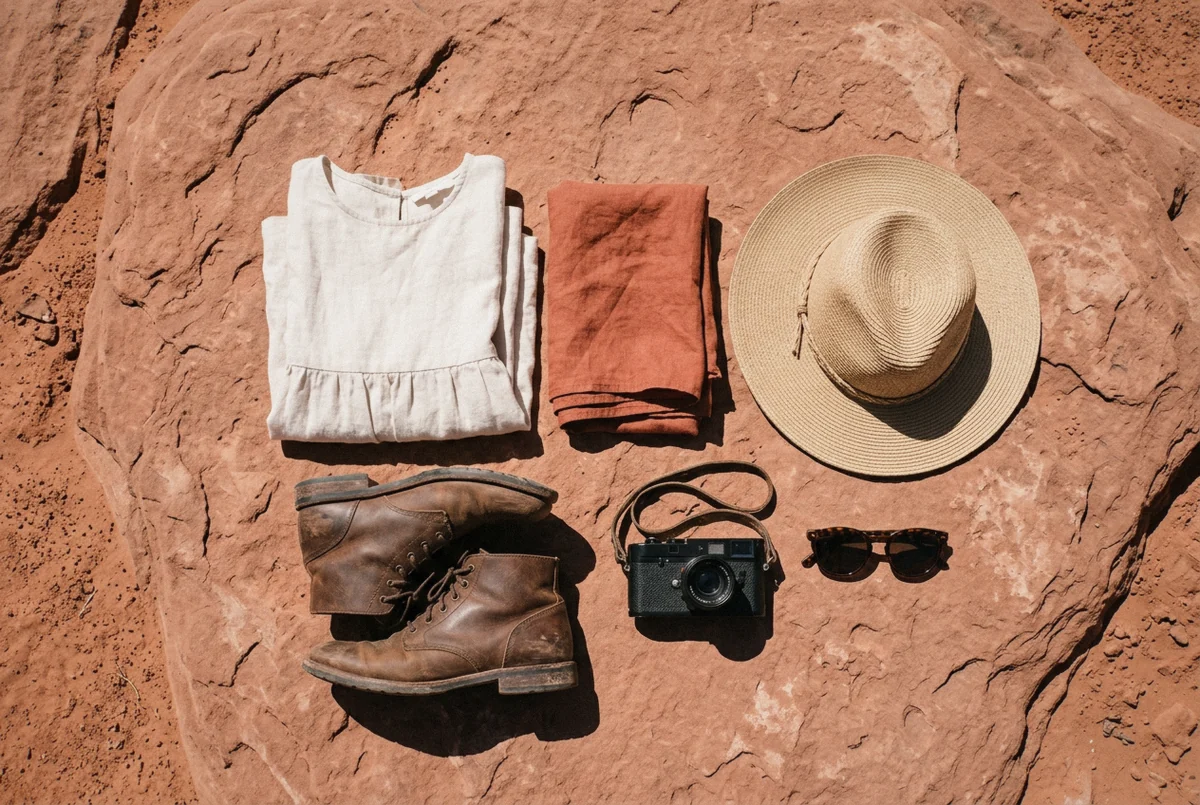
What to wear for a desert photoshoot in Arizona starts with a relief: every session in the catalog brings the photographer, the camera and the editing, so the wardrobe question is entirely yours to solve and genuinely short. What's left is about working with the actual terrain, red sandstone that photographs warm, fine dust that finds white shoes within minutes, and a temperature swing between Phoenix and the Grand Canyon rim that most first-time visitors underestimate.
Quick answer
Every session in the Arizona photoshoot catalog supplies the photographer, the camera and the edited gallery, so your bring-list is short: earth-toned, quick-dry clothing, closed grippy shoes and a light layer for cold mornings. Skip white shoes and loose bags, since fine red dust and Antelope Canyon's no-bag rule both work against them.
Key takeaways
- Tours provide the photographer, the equipment and the edited photos; nothing about wardrobe is handled for you
- Bring earth tones and quick-dry fabric; leave white shoes and bulky bags at the hotel
- The single biggest warning: red slot-canyon dust clings to white fabric and pale sneakers within the first ten minutes
- Phoenix runs a dry 40°C (104°F) in June, while the Grand Canyon rim sits roughly 10°C cooler with snow possible December through February
- Closed, grippy shoes beat sandals on slickrock and the Horseshoe Bend rim trail; see the footwear section below
- The Sedona session and Phoenix session both run 30-minute and 1-hour slots, so pack for one outfit unless you book the 4-hour format
What to Wear for a Desert Photoshoot
Arizona's classic frames are built from warm, saturated ground, red sandstone at Sedona and Horseshoe Bend, pale sand near the slot canyons, so clothing that reads as flat or synthetic-bright in a normal parking lot can either disappear into that backdrop or fight it outright.
Base Layer and Fit
A fitted, quick-dry top and bottom hold their shape through a walking session far better than cotton, which goes limp and shows sweat within the first twenty minutes in dry desert heat. Choose pieces you can move in freely, since most sessions involve real walking between spots rather than standing still in one place, and skip anything so loose it catches wind on an exposed rim like Horseshoe Bend's.
Sun Protection
Arizona's sun is direct and largely shadeless at the viewpoints these sessions use, so a lightweight long sleeve or a wide-brim hat does more for comfort across a one-hour session than sunscreen alone, and it photographs better than squinting. Apply sunscreen before you dress rather than mid-session, since reapplying over styled hair is awkward and most bookings don't build in a break for it.
A Light Layer for Cold Starts
Sunrise and early-morning slots, the sessions this catalog recommends for softest light, start noticeably cold even in summer, and the Grand Canyon's South Rim sits at roughly 2,100 meters elevation with air about 10°C cooler than Phoenix at the same hour. A packable jacket or shawl you can shed once the light warms up covers both ends of that swing without changing your outfit.
Footwear: What Actually Works on Red Rock
Footwear is the detail most first-timers get wrong, and it's specific to Arizona's actual terrain rather than a generic packing-list line. Closed, grippy sneakers or light hiking shoes are the right call almost everywhere in this catalog: they hold on slickrock at Sedona, they're fine for the 1.2-kilometer paved rim walk at Horseshoe Bend, and they cover the roughly 370-meter walk from the parking area to the dock on the Antelope Canyon boat tour. Sandals with a secured strap work only for lounging between shots, never for the walk itself, and bare feet are fine solely on the rare soft-sand dune setting, not on any slickrock surface.
Heels and unsecured flip-flops are a genuine hazard on both the rim trail and the slot-canyon approach: they offer no grip on smooth stone and are the most common cause of a turned ankle on an otherwise easy walk.
| Color | Good? | Why |
|---|---|---|
| Earth tones (terracotta, rust, sage, cream) | Best overall choice | Sit naturally against red sandstone rather than competing with it; the safest default for every location in the catalog |
| Deep red or burgundy | Good in small doses | Echoes Horseshoe Bend's rock without matching it so closely you disappear into the background |
| White | Context-dependent | Reads crisp against dark canyon walls but shows red dust within minutes on a slot-canyon or dune shoot |
| Black | Usually fine | Holds up against light sandstone and reads well in evening light, but absorbs heat fast in direct midday sun |
| Bright neon or fluorescent | Avoid | Reads jarring against Arizona's muted palette and pulls the eye away from your face in almost every frame |
| Busy prints or logos | Avoid | Competes with the visual texture already in sandstone striations and canyon walls; a photographer has to work around it |
| Cotton vs. quick-dry synthetic | Quick-dry wins | Arizona's dry heat means cotton shows sweat fast and stays limp through a session; quick-dry fabric holds its shape and color better in photos |
What to Bring
A short, practical list covers what actually gets forgotten, based on the real conditions across the catalog's locations.
- Refillable water bottle, no shade for hours at most viewpoints
- Reef-safe or mineral sunscreen, reapply before you dress, not mid-session
- Wide-brim hat with a chin strap, loses in the wind on the exposed Horseshoe Bend rim
- Light packable jacket, sunrise slots run cold even in summer
- Small crossbody bag or pockets, large bags are prohibited on Antelope Canyon tours
- Cash in small bills, some park entrance booths and overlook parking are cash-only
- Backup hair tie or clip, wind on exposed rims undoes styling fast
- Extra outfit only if you booked the 4-hour package, shorter sessions cover one look
- Closed, grippy shoes, see the footwear section above for where sandals fall short
- Lip balm and a small towel, dry desert air and dust both dry out skin fast
What Arizona Photoshoot Tours Provide, So You Don't Overpack
The wardrobe question stops at clothing and footwear, because every session handles the rest.
| Item | Usually Provided | Bring Your Own | Notes |
|---|---|---|---|
| Camera and lenses | Yes, every session | Nothing, unless you want casual phone shots between setups | All nine sessions in the catalog include the photographer's own equipment |
| Photo editing | Yes | Nothing | Same photo ladder across the Sedona session and most others: 20 photos for one hour, up to 50 for four |
| Outfit or props | No | Your own clothing, always | No session in the catalog supplies clothing; see the color and fabric guidance above |
| Park entry or permit | No | Yes, paid separately | Grand Canyon admission ($35/vehicle) and the Antelope Canyon Navajo tour ticket are not included on any package |
| Transport to the shoot | Rare | Yes, on most listings | The Horseshoe Bend session is the one exception in the catalog that includes transport |
| Meeting-point directions | Yes | Nothing | Emailed after booking on every session; the Grand Canyon sessions let you name your own viewpoint |
| Water or shade | No | Bring your own water | Viewpoints and rim trails are largely open with little shade |
| Wardrobe styling advice | Sometimes, informally | Plan ahead using this guide | Not a listed inclusion on any package; photographers may still offer quick posing or color tips on site |
What NOT to Wear or Bring
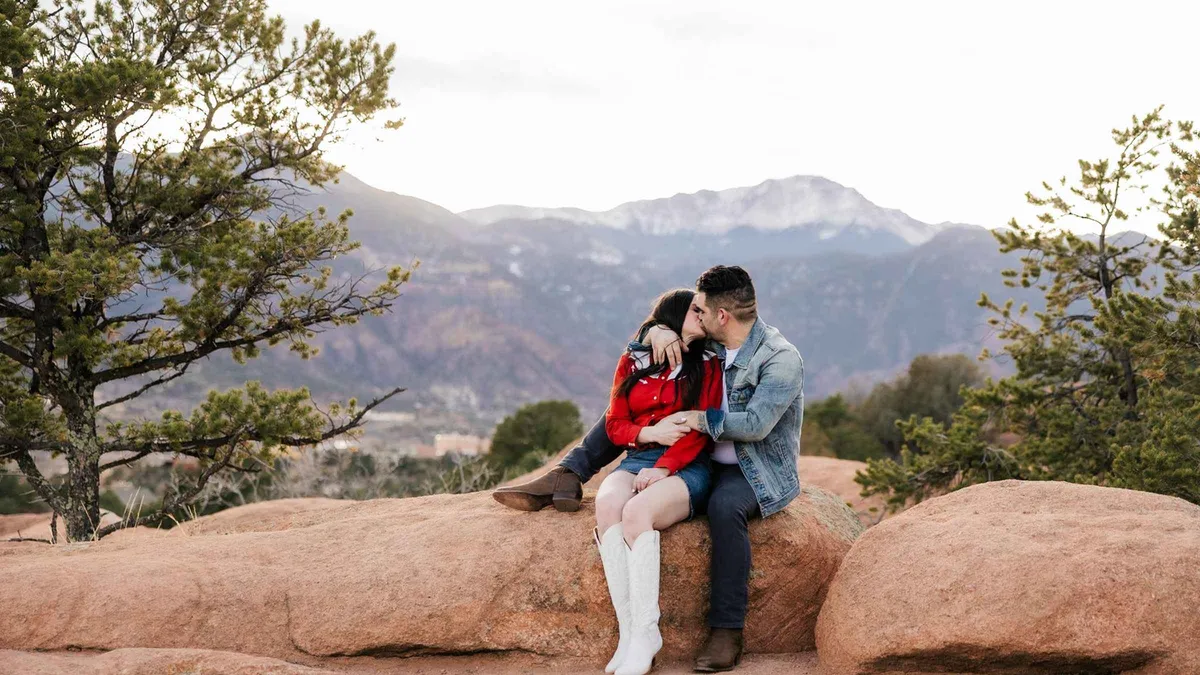
A few items work against you specifically on these shoots rather than being generic travel-blog caution. White or pale shoes are the biggest one: fine red dust at the slot canyons and dunes clings fast and doesn't brush off clean, so a pair you actually like will come home stained. Large bags and backpacks are a second: Antelope Canyon tours prohibit big bags and backpacks outright, so anything you carry needs to fit in pockets or a small crossbody.
Heels and unsecured flip-flops belong on this list too, a real fall risk on slickrock and the rim trail alike, not just an aesthetic mismatch. And tripods, monopods and selfie sticks are banned outright inside Antelope Canyon by Navajo Nation Parks rules, so leave any camera support gear behind if that stop is part of your day.
Packing by Season in Arizona
Arizona's desert swings hard enough between seasons that the outfit that works beautifully in November is a genuine problem in June, and the Grand Canyon rim runs its own, cooler schedule apart from the desert floor.
| Season | Wear this | Why |
|---|---|---|
| October through April | Light long sleeves or a mid-weight top, with a packable jacket for sunrise slots | Arizona's golden season for photoshoots: mild days, cool mornings, and the softest light of the year |
| May and June | Breathable quick-dry fabric, minimal layers, sunrise or sunset slots only | Dry heat climbs to around 40°C (104°F) in Phoenix by June; midday shoots are genuinely uncomfortable |
| July through September | Quick-dry fabric plus a light rain layer for afternoon storms | Monsoon season brings sudden storms most afternoons; morning sessions avoid the worst of it |
| December through February at the Grand Canyon rim | A proper coat, hat and gloves layered over your outfit, removed only for the shot | The South Rim sits about 10°C cooler than Phoenix, and snow is possible on the rim through winter |
Dressing for Him, Her, and a Winter Shoot
Women's outfits that photograph best here lean toward flowing midi dresses or fitted separates in the earth-tone range, since fabric with a little movement catches the wind at Horseshoe Bend's rim in a way a stiff cut doesn't. Men typically do best in a fitted button-down or henley in a solid muted tone, tucked or half-tucked rather than boxy, since a heavily patterned shirt fights the sandstone texture the way patterns do throughout this guide. Coordinating as a couple means picking two or three colors from the same earth-tone family, one person in rust, the other in cream, rather than matching the identical shade head to toe.
For a winter shoot at the Grand Canyon specifically, dress in real layers you can remove for the actual frames: a coat and scarf on the walk to the viewpoint, stripped down to the fitted outfit underneath only for the minute the camera is on you, since the temperature drop off the rim is sharper than most visitors expect from Arizona's desert reputation.
What to Wear for a Desert Photoshoot: More Questions
What should I wear to a desert photoshoot?
Quick-dry, fitted clothing in earth tones, rust, terracotta, sage or cream, paired with closed, grippy shoes and a light layer for cold starts. The color and footwear sections above cover the full reasoning for each choice.
What colors not to wear for a photo shoot?
Avoid bright neon and busy prints or logos; both compete with the sandstone texture that makes Arizona's frames work and pull the eye away from your face. White shoes are a separate problem here specifically, since red dust stains them fast.
What type of clothes should I wear in the desert?
Lightweight, quick-dry fabric that moves with you, not stiff structured pieces. Cotton stays damp with sweat in Arizona's dry heat and loses its shape in photos faster than a synthetic blend does.
Can I wear jeans for a desert photoshoot?
It's usually not the best choice. Denim traps heat in Arizona's dry sun, restricts the walking these sessions involve, and reads visually heavy against sandstone. A quick-dry trouser or midi skirt in a muted color photographs better.
Can I wear shorts?
Yes, generally, with one caveat: stick to quick-dry fabric rather than cotton, and bring a light layer for sunrise slots, since shorts alone are genuinely cold before the sun clears the rim.
Do I need special shoes for a slot canyon or rim walk?
Not specialized footwear, but grippy, closed shoes matter more here than most destinations. See the footwear section above for where sandals and open shoes fall short on slickrock and the rim trail.
Is a light jacket really necessary in the desert?
Yes, for the sunrise and early-morning slots most sessions recommend. Desert mornings run cold even in summer, and the Grand Canyon rim runs roughly 10°C cooler than Phoenix at any hour.
What Should You Actually Pack?
If you're booking a 30 to 60 minute session
pack one earth-toned outfit and a light layer, no changing time is built into shorter slots
If you're booking the 4-hour Grand Canyon or Antelope Canyon format
bring two outfits in different but coordinating tones, since the longer format is built for outfit changes
If your session touches Antelope Canyon
leave large bags, tripods and white shoes behind entirely, see the what-not-to-bring section above
If you're shooting a winter sunrise at the Grand Canyon rim
layer a real coat over your outfit and strip down only for the actual frames
Most of what to wear for a desert photoshoot in Arizona comes down to matching your clothing to the ground you'll be standing on: earth tones over red sandstone, quick-dry fabric over Arizona's dry heat, and grippy shoes over slickrock and dust. Everything else, the photographer, the camera, the editing, is already handled by this independent Arizona photoshoot guide.